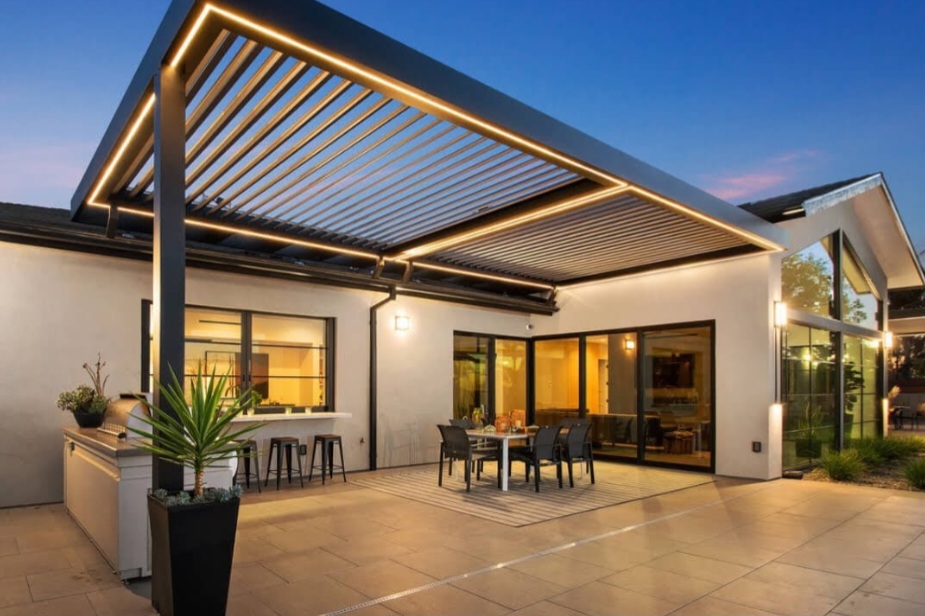
Smart, Green, and Bright: Integrating Sustainable Waterproof LED Solutions into Your Smart Home
The rapid evolution of the smart home has moved beyond the four walls of our houses. We are now entering an era where our gardens, patios, and driveways are as “connected” as our kitchens and living rooms. For the tech-savvy homeowner, the goal is no longer just to have a light that turns on and off; it is to create a responsive, energy-efficient ecosystem that enhances the home’s aesthetic while minimizing its carbon footprint.
At the heart of this outdoor automation movement is the integration of outdoor LED light strips waterproof technology. These aren’t just simple strings of bulbs; they are sophisticated semiconductors capable of millions of colors, precision dimming, and integration with advanced AI assistants. However, the unique challenge of the outdoors—moisture, temperature swings, and UV exposure—means that “smart” must also mean “durable.” This guide explores how to build a futuristic, eco-friendly outdoor lighting system that stands the test of time and weather.
The Efficiency Revolution: Why LEDs are the Sustainable Choice
In the context of global energy conservation, lighting is one of the “low-hanging fruits” for reducing household energy consumption. Traditional halogen or incandescent outdoor lights are notoriously wasteful, converting up to 90% of their energy into heat rather than light.
Luminous Efficacy and Carbon Footprint
Modern energy-efficient waterproof LED strips offer a luminous efficacy that was unimaginable a decade ago. While a traditional bulb might offer 15 lumens per watt, high-quality LED strips can exceed 100 lumens per watt. For a large backyard installation, this transition can reduce lighting-related energy bills by over 80%. When combined with smart scheduling, the environmental impact is significantly mitigated, making it a cornerstone of the “Green Home” philosophy.
Longevity as Sustainability
True sustainability isn’t just about energy use; it’s about waste reduction. A “cheap” non-waterproof strip that fails after six months contributes to the growing problem of e-waste. By investing in professional-grade, silicone-encapsulated LED strips, you are choosing a product with a 50,000-hour lifespan. In a typical smart home setup where lights run for 4-6 hours a night, these systems can last for over 20 years, effectively removing the need for replacement cycles.
The Anatomy of a Smart Outdoor Lighting System
To build a truly intelligent outdoor environment, you need more than just the lights. You need a cohesive “stack” of technology.
The Controller: The Brain of the Operation
Outdoor LED strips require a controller to interface with your Wi-Fi, Zigbee, or Thread network. For the smart home enthusiast, the choice of protocol is vital:
- Zigbee/Z-Wave: Ideal for large properties where Wi-Fi signals might struggle to reach the back fence. These mesh networks are robust and don’t congest your home internet.
- Wi-Fi (Matter-enabled): The new Matter standard is a game-changer, ensuring that your waterproof LED strips work seamlessly across Apple HomeKit, Google Home, and Amazon Alexa without needing multiple bridges.
The Power Supply: Efficiency Starts Here
Often overlooked, the “Driver” or power supply is where energy conversion happens. Using a high-efficiency, IP67-rated transformer ensures that energy isn’t lost as heat before it even reaches your LEDs. Look for drivers with “Power Factor Correction” (PFC), which is a hallmark of premium smart home hardware.
Automation Strategies for the Eco-Conscious Home
Smart lighting isn’t smart if it’s left on all night at 100% brightness. Real intelligence lies in automation that respects both your wallet and the local environment.
Astronomical Timers vs. Photocells
Traditional “dusk-to-dawn” sensors (photocells) can be fooled by shadows or dirt. Smart systems use astronomical timers that calculate the exact sunset and sunrise times based on your GPS coordinates. This ensures your lights turn on at the precise moment of twilight, saving minutes of unnecessary energy use every single day.
Adaptive Dimming and Motion Integration
Why illuminate your entire patio at full power when you’re inside watching a movie? Using smart outdoor motion sensors, you can program your LED strips to sit at a “glow” level of 10% (safe and atmospheric) and ramp up to 100% only when movement is detected on the path. This “adaptive dimming” is the peak of energy-efficient design.
Overcoming the “Outdoor Obstacle”: Waterproofing Smart Tech
The most common point of failure in smart outdoor lighting isn’t the software—it’s the hardware’s reaction to water. Smart home enthusiasts often make the mistake of using “indoor-rated” smart controllers in outdoor enclosures.
The IP Rating Reality Check
As discussed in technical circles, the Ingress Protection (IP) rating is your first line of defense. For a smart home setup:
- Controllers: Should be housed in an NEMA-rated waterproof junction box, even if they claim to be weather-resistant.
- The Strips: For the tech to remain functional, the outdoor LED light strips waterproof rating must be at least IP67. This prevents moisture from reaching the sensitive IC (Integrated Circuit) chips that allow for individual pixel control or smooth dimming.
Light Pollution and “Dark Sky” Compliance
An often-ignored aspect of being “green” is reducing light pollution. Excessive, poorly directed light disrupts local ecosystems and bird migrations.
- Shielding and Direction: LED strips are inherently directional. By mounting them facing downward (under-cap lighting), you illuminate the ground without spilling light into the night sky.
- Spectrum Control: Smart RGBW strips allow you to shift the color spectrum. Research suggests that warm, amber-toned light is less disruptive to nocturnal wildlife than high-energy blue-white light. A smart home allows you to automate this shift as the night progresses.
DIY vs. Pro-Sumer: Installation Tips for Techies
For those who enjoy the “Hands-On” aspect of home automation, installing these systems offers a satisfying project.
- Signal Testing: Before sticking your strips, test the signal strength of your smart controller at the farthest point of the garden. You may need a signal repeater or a mesh node.
- Voltage Drop Calculations: If you are running 20 meters of light around a pool, a 12V system will fail you. Always opt for 24V for smart home projects to ensure the data signal and power remain consistent across the entire run.
- The Waterproof Seal: Use marine-grade heat shrink tubing over your smart connectors. Water can travel up a wire (wicking) and fry a $100 smart controller if the connection to the strip isn’t hermetically sealed.
The Financial Logic: ROI of Smart Lighting
Is smart lighting a luxury or an investment? When you factor in:
- The 80% reduction in energy use.
- The increased lifespan of the hardware through dimming (LEDs run cooler and last longer when dimmed).
- The added security value of a motion-responsive home. The “Return on Investment” (ROI) becomes clear within 3 to 5 years. Furthermore, a fully integrated smart landscape is a significant selling point in the modern real estate market.
Conclusion: Creating a Responsive Landscape
Building a smart home is about creating an environment that responds to your needs while respecting the world around it. By integrating high-quality energy-efficient waterproof LED strips with modern automation protocols, you achieve a level of control and efficiency that was once the stuff of science fiction.
Whether you are looking to save on your monthly utility bill, reduce your environmental impact, or simply enjoy the convenience of a garden that “wakes up” as you walk into it, the solution lies in the quality of your components. Don’t settle for basic lighting—embrace the future of sustainable, intelligent outdoor living.