How To Customize Wallpapers for Any Device Size
A wallpaper can look sharp on one screen and awkward on another in a matter of seconds. Cropped faces, stretched graphics, blurry text, weird empty space, all of that usually comes down to sizing. Once you know how screens handle images, the whole process gets much easier.
Good wallpaper customization comes down to three things: resolution, aspect ratio, and safe placement. Get those right, and your design holds up whether it lands on a phone, tablet, laptop, or ultrawide monitor.
Start With the Screen, Not the Design
A lot of people begin by making something pretty and only later wonder why it looks off on their lock screen or desktop. Better approach: start with the device size first.
Every screen has a pixel resolution, such as 1170 x 2532 for a phone or 1920 x 1080 for a laptop. Alongside resolution, each screen also has an aspect ratio, which describes the shape of the display. A tall phone screen and a wide desktop monitor may both show high-quality images, but they frame content very differently.
Here is a quick reference table:
| Device Type | Common Resolution Examples | Typical Shape |
| Smartphone | 1080 x 1920, 1170 x 2532, 1440 x 3200 | Tall |
| Tablet | 1536 x 2048, 1668 x 2388 | Slightly tall or balanced |
| Laptop | 1920 x 1080, 2560 x 1600 | Wide |
| Desktop Monitor | 1920 x 1080, 2560 x 1440, 3840 x 2160 | Wide |
| Ultrawide Monitor | 3440 x 1440, 5120 x 1440 | Extra wide |
Before you customize anything, check the exact screen resolution of the target device. A wallpaper built for a standard laptop usually falls apart on an ultrawide display, and a desktop wallpaper rarely fits a phone without major cropping.
Learn the Difference Between Resolution and Aspect Ratio
People mix up resolution and aspect ratio all the time, which is fair. They are connected, though they solve different problems.
Resolution
Resolution is the total number of pixels in the image. More pixels usually means more detail. A wallpaper set at 3840 x 2160 has a much better chance of staying crisp on a 4K monitor than one made at 1280 x 720.
Aspect Ratio
Aspect ratio is the image shape. A 16:9 wallpaper feels wide and cinematic. A 9:19.5 wallpaper feels tall and phone-friendly. When the aspect ratio does not match the screen, the device often crops the image automatically.
For wallpaper work, aspect ratio usually causes the biggest headaches. A design may be high-resolution and still look wrong because the shape is off.
Build From a Large Master File
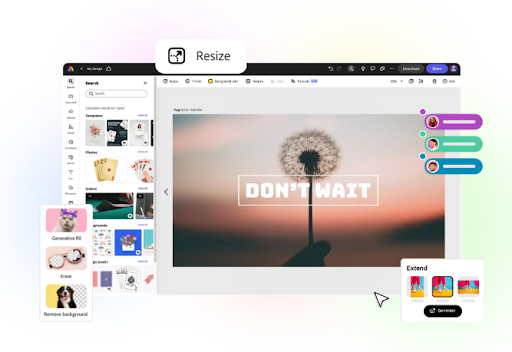
One of the smartest habits in wallpaper design is creating a master file in a wallpaper maker that is larger than any version you plan to export. That gives you room to crop down for different devices without losing quality.
A solid master size for general use might be:
- 4000 x 4000 pixels for art-heavy or square-based compositions
- 4500 x 3000 pixels for wide desktop-first projects
- 3000 x 5000 pixels for mobile-first projects
A large master file gives you freedom. You can pull a vertical crop for a phone, a wide crop for a desktop, and a medium crop for a tablet from the same original design.
Keep Important Elements in the Safe Zone
Safe zone is one of those concepts that saves a design quietly. It means keeping the most important parts of the wallpaper away from edges where cropping, widgets, clocks, app icons, or dock bars may interfere.
What belongs in the safe zone
Keep items like these close to the center area:
- Faces
- Logos
- Quotes or text
- Main illustrated subject
- Key focal objects
For phones, the top and bottom areas often get crowded fast. Time, notifications, camera cutouts, and lock-screen widgets can cover part of the image. For desktops, icon columns and taskbars can block corners and lower edges.
A practical trick: imagine a margin around all four edges, about 10% to 15% inward. Place critical content inside that space.
Customize for Phones
Phone wallpapers are usually the trickiest because screens are tall, narrow, and filled with interface elements.
Use vertical composition
A phone wallpaper works best when the design leads the eye up and down. Portrait photography, single-subject illustrations, gradients, abstract shapes, and soft textures all fit naturally on a vertical screen.
Leave breathing room at the top
The top section often gets interrupted by time, signal icons, battery indicators, or a camera cutout. Avoid placing detailed text or a person’s eyes too close to that area.
Watch lock screen depth effects
Some phones create layered effects between the wallpaper and the clock. When that happens, subject placement matters even more. A head, plant, or building top can look great there, though only when positioned very carefully.
Customize for Tablets
Tablets sit in an in-between space. They are neither fully phone-shaped nor fully desktop-shaped, which means a wallpaper can feel awkward unless it is framed with flexibility in mind.
Many creators focus heavily on technical details like resolution and aspect ratio but often overlook the importance of overall creative direction. A well-structured approach that combines design principles with lifestyle insights can significantly improve how wallpapers perform across different devices. Understanding how visuals connect with everyday experiences, aesthetics, and user preferences helps create designs that feel more natural, engaging, and visually appealing across all screens.
Go for balanced layouts
Symmetrical compositions, centered artwork, landscapes with generous spacing, and subtle patterns tend to perform well on tablets.
Avoid edge-heavy detail
Because tablet orientations change, a design that looks perfect in portrait mode may feel cramped in landscape mode. Keep the outer edges cleaner than you think you need.
Customize for Laptops and Desktops
Desktop wallpapers give you more width, more breathing room, and more opportunities for subtle detail.
Design for horizontal flow
Wide landscapes, panoramic city scenes, layered abstract art, and minimalist graphics often work well here. The eye naturally moves left to right across a desktop background.
Think about icons and taskbars
Many people line app icons along the left side of the desktop. Others keep a dock at the bottom. A busy wallpaper in those zones can make the whole screen feel cluttered.
For cleaner results:
- Keep dense detail away from likely icon areas
- Use darker or softer zones behind icons
- Leave some negative space for usability
Cropping Without Ruining the Image
Cropping is where wallpaper customization either becomes polished or messy. The goal is to preserve the feeling of the original design while reshaping it for a new screen.
Good cropping habits
Start by identifying the focal point. Then crop around it in a way that still feels intentional.
For example, if your wallpaper shows a mountain range with a sun above it:
- A desktop crop can keep the full width of the landscape
- A phone crop may center on one peak and the sun
- A tablet crop may keep two peaks and more sky
Every version should look like a finished design, not a leftover piece from a larger image.
Bad cropping habits
Common mistakes include:
- Cutting off part of a face
- Leaving text too close to the edge
- Cropping so tightly that the image feels cramped
- Stretching instead of resizing proportionally
Stretching is especially rough on wallpapers. Even a good image starts to feel cheap when proportions get distorted.
Pick the Right File Format
File format affects quality and file size more than many people expect.
| Format | Best For | Notes |
| JPG | Photos, gradients, general wallpaper use | Small file size, good for most cases |
| PNG | Graphics, illustrations, text-heavy designs | Cleaner edges, larger files |
| WebP | Modern compressed images | Efficient, though device support can vary depending on workflow |
For most wallpapers, JPG works well. For artwork with crisp lines or text, PNG may hold details better.
Create a Small Set of Export Sizes
You do not need to export 25 versions for every possible device. A smart set of common sizes usually covers most needs.
Helpful export set
Phones
- 1080 x 1920
- 1170 x 2532
- 1440 x 3200
Tablets
- 1668 x 2388
- 2048 x 2732
Desktops
- 1920 x 1080
- 2560 x 1440
- 3840 x 2160
Ultrawide
- 3440 x 1440
That kind of pack gives you broad coverage without turning the process into busywork.
Test on Real Screens Before Calling It Done
A wallpaper can look excellent inside a design program and still fail on the actual device. Colors shift. Crops land differently. Icons cover more than expected.
Test exported versions on real screens whenever possible. Look for:
- Blur or softness
- Awkward cropping
- Hidden focal points
- Text becoming hard to read
- Distracting detail behind icons
A quick test round usually reveals problems faster than staring at guides and rulers for another 20 minutes.
Keep a Reusable Workflow
Once you build a clean process, wallpaper customization gets much faster. A simple workflow might look like this:
- Check target screen sizes
- Build a large master file
- Place key elements in the center-safe area
- Export by device category
- Test on actual screens
- Adjust crops where needed
After two or three projects, sizing starts to feel much less random.
Final Thoughts
Customizing wallpapers for different device sizes is mostly about planning well early on. Know the screen shape, protect the focal point, and crop with purpose. A good wallpaper should feel like it belongs on the device, not like it barely survived the resize.
Stay in touch to get more updates & news on Vixencom!